
The Dish — Murriyang
A world-famous radio telescope just 5 minutes from Alectown.
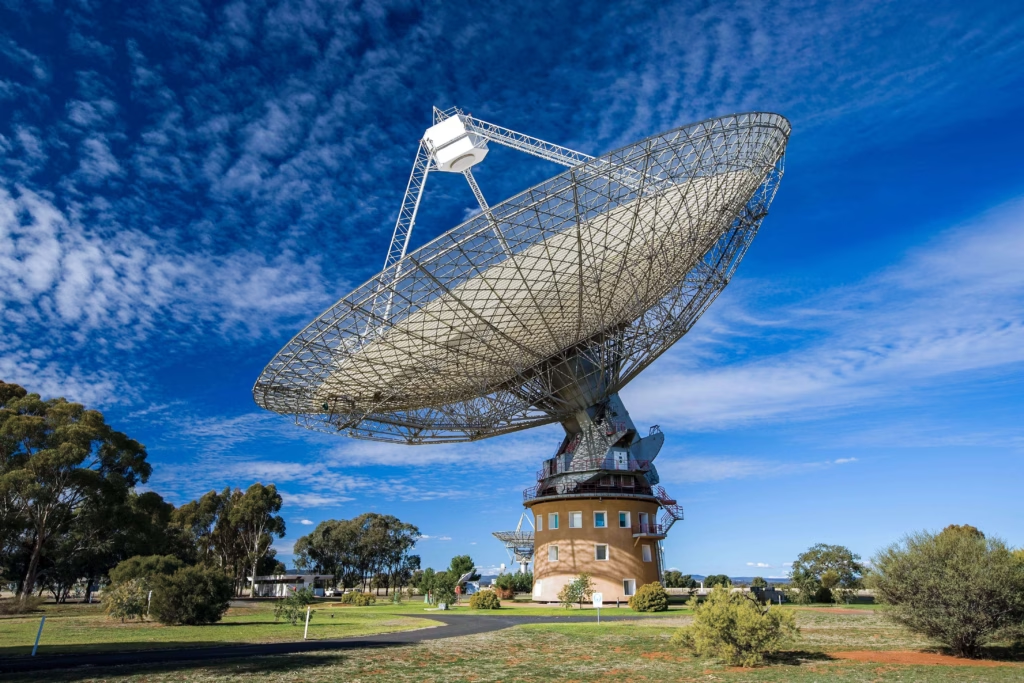
The Dish
Located just 5 minutes from Alectown, the CSIRO Radio Telescope Observatory is home to the famous “The Dish”, officially known as Murriyang. This massive 64-metre radio telescope is the largest telescope at the CSIRO’s facility and is one of Australia’s most important astronomical landmarks. Commencing operations in 1961, the Dish remains at the cutting edge of astronomical discovery and has been regularly upgraded throughout its history. Today, it is a world-class facility used by astronomers from across Australia and around the world. The Dish operates 24 hours a day, 365 days a year.
The Dish at a Glance
Discover the key facts behind one of Australia’s most recognisable astronomical landmarks.
| Feature | Details |
|---|---|
| Official name | Murriyang |
| Type | Radio telescope |
| Size | 64 metres |
| Commenced operation | 1961 |
| Location | Approximately 5 minutes from Alectown |
| Operation | 24 hours a day, 365 days a year |
| Users | Astronomers from Australia and around the world |
| Research | Galaxies, pulsars, magnetic fields, black holes and more |
Exploring the Universe through Radio Astronomy
The Australia Telescope National Facility (ATNF) is one of the world’s most advanced radio astronomy facilities and the only facility of its kind in the Southern Hemisphere. Its geographically unique location provides an important perspective for studying the southern skies. The facility can scan a broad spectrum of radio waves and is used for a wide variety of astronomical research. The ATNF is Australia’s largest astronomy institution and undertakes more than 90 per cent of Australian research using radio astronomy.
Research at the facility covers topics including:
- Magnetic fields
- The evolution of galaxies
- Black holes
- Neutron stars
- Pulsars
- Gravitational waves
- The structure and development of the universe
More Than Just One Telescope
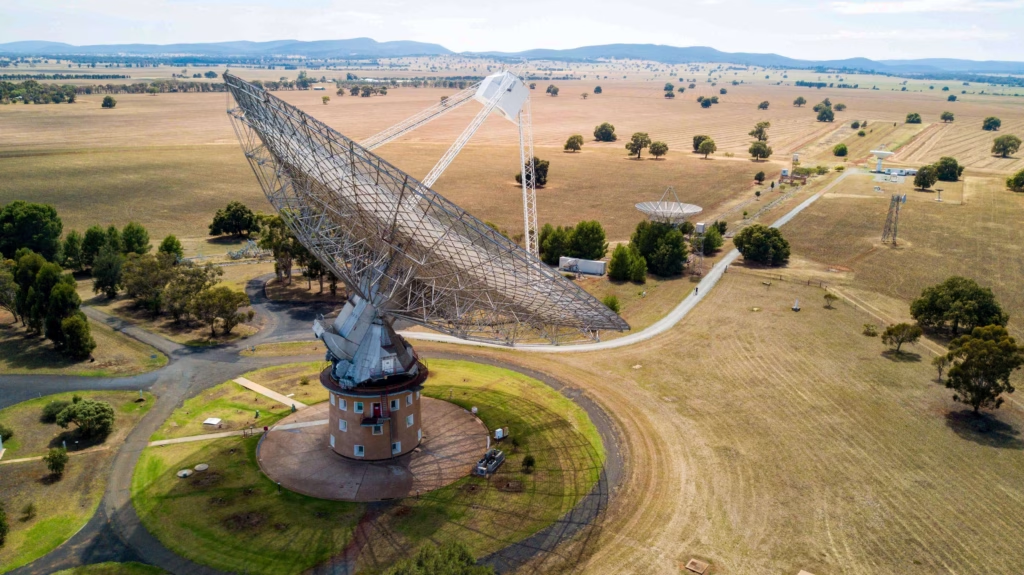
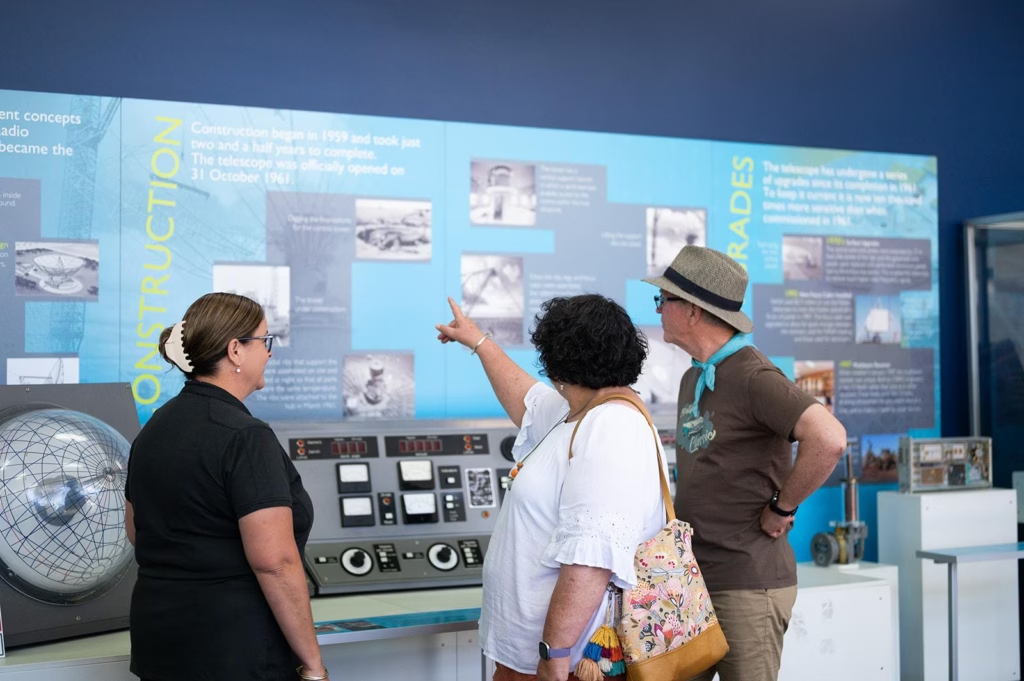
Although the 64-metre Dish is the most famous telescope on site, there are actually a number of telescopes at the facility. Visitors can also explore an excellent visitor centre, which includes:
- A planetarium
- A cinema
- Interactive displays
- Outdoor exhibits
- A gift shop
The gift shop has plenty of interesting items for both children and adults, including books, games, puzzles and scientific kits. The interactive outdoor displays are another great way to learn about astronomy and the science behind the telescopes.
A World-Class Research Facility
The Dish plays an important role in astronomical research both in Australia and internationally. Around 400 astronomers from approximately 20 countries visit the facility each year to conduct observations. Researchers are allocated observation time on the telescopes by an expert committee. Applications are assessed on the scientific merit of the proposed research program. Observers are able to conduct their studies without charge in line with international reciprocal research conventions. The Dish is also ranked third in the world in terms of citations in research papers, demonstrating its significant contribution to astronomical research.
The Power of the Dish
The 64-metre Dish is one of the largest radio telescopes in the Southern Hemisphere. Since it began operating in 1961, the telescope has been regularly upgraded and is now around 10,000 times more powerful than it was when it first commenced operations. Its incredible sensitivity has made it an important tool for studying some of the most fascinating objects in the universe. More than 1,000 of the approximately 2,000 known pulsars have been discovered using the Dish. Today, the telescope uses a multibeam receiver to conduct large-scale mapping of the sky. The Dish has also identified more than 2,000 galaxies similar to our own Milky Way.
Supporting Space Exploration
The Dish has played an important role in space exploration throughout its history.
1962
Mariner 2
The telescope tracked Mariner 2, the first successful interplanetary space mission, as it travelled past the planet Venus.
1969
Apollo 11
In July 1969, the Dish became a prime receiving station for the Apollo 11 mission to the Moon.
The telescope’s role in receiving video from the first Moon walk later inspired the fictional film The Dish.
2018–19
Voyager 2
More recently, in 2018–19, the telescope supported NASA’s Voyager 2 spacecraft as it crossed into interstellar space.
The Dish is also used by NASA and international space agencies to track satellites and spacecraft.
The Dish Today
More than six decades after it first began operating, Murriyang continues to be an essential part of Australia’s astronomical research. Its combination of advanced technology, location and scientific expertise allows astronomers to explore the universe in ways that would otherwise be impossible. From discovering pulsars and mapping distant galaxies to supporting spacecraft travelling billions of kilometres from Earth, the Dish continues to make an important contribution to our understanding of space.
Visit The Dish
The CSIRO Radio Telescope Observatory is not only an important scientific facility but also a fascinating tourist attraction. The visitor centre is open most days until late, giving visitors plenty of time to explore the exhibits, discover the history of the telescope and learn about the science of radio astronomy. Allow a couple of hours to experience everything the attraction has to offer.
Sam Neill and The Dish
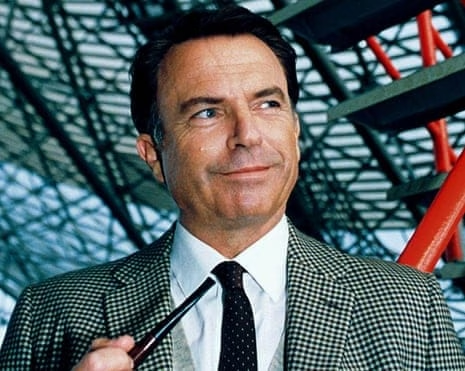
4 September 1947 – 13 July 2026
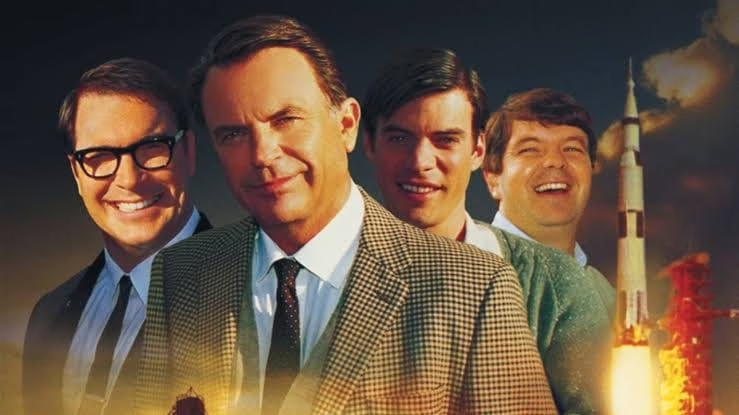
Sir Nigel John Dermot Neill was born in Omagh, Ireland. He was a New Zealand and Australian actor who played leading roles in many film and television productions including The Final Conflict, The Hunt for Red October, The Piano, Jurassic Park, Dead Calm, Merlin’s Apprentice, Peaky Blinders and The Tudors, among many others. He also starred in the beloved Australian classic The Dish, which was set in the Alectown district. Sam Neill played Cliff Buxton, the reliable, sensible, pipe-smoking director of the Alectown Observatory. The movie tells the story of the Alectown radio telescope’s mission-critical role in capturing and broadcasting NASA’s live global television broadcast of the Apollo 11 lunar landing.
On Making the Dish
Sam Neill talked of his profound affection for the Alectown district and its people and working on the movie enabled the tiny, humble community of Alectown to connect billions of people around the world. The monumental global broadcasting event’s success was completely dependant on the Dish which is set on the simple, ordinary rural setting in central-west New South Wales. Those who remember Sam Neill working on the project say he gave a masterclass in humility and comedic timing.
The Setting
Filming took place partly in connection with the real Alectown Dish, bringing renewed international and generational attention to the historic telescope.
Creative Collaboration
Santo Cilauro, who wrote The Dish, described Sam Neill as a study in humility and a pleasure to work with. Neill was able to dissect dialogue and precisely deliver scene after scene with emotion, timing and humour.
Cultural Impact
Patrick Warburton, who was part of the cast, felt Neill, the cast and production team captured rural Australian life in the 1960s and highlighted Australia’s unique brand of understated humour. The contrast between small-town life and the global importance of man’s first step on the Moon helped make the film so memorable.